Vintage years
Vintage years
A year in Georgia is not one thing. Rtveli in Kakheti and the October pick in Racha are different seasons, so the only honest way to say what a vintage was like is region by region — heat, hot days and the September rain.
1980–2025
- Regions5
- Full seasons230
- SourceERA5-Land · ERA5
The latest season
2025, region by region.
Heat is the Winkler index — April to October, added up — and the percentage beside it is against the ten seasons before. Two regions can have the same number and quite different vintages: the year is judged where the grapes grow.
Kakheti
722 m · one grid cell
1,486°C·days
- Season mean
- 16.8 °C
- Days above 35 °C
- 0
- September rain
- 111 mm
- Damaging frost days
- 0
Grid cell 41.90° N, 45.50° E
Kartli
596 m · one grid cell
1,478°C·days
- Season mean
- 16.6 °C
- Days above 35 °C
- 0
- September rain
- 103 mm
- Damaging frost days
- 2
Grid cell 42.00° N, 44.10° E
Racha-Lechkhumi
569 m · one grid cell
1,619°C·days
- Season mean
- 17.4 °C
- Days above 35 °C
- 0
- September rain
- 214 mm
- Damaging frost days
- 0
Grid cell 42.50° N, 43.20° E
Imereti
167 m · one grid cell
1,910°C·days
- Season mean
- 18.8 °C
- Days above 35 °C
- 10
- September rain
- 156 mm
- Damaging frost days
- 1
Grid cell 42.20° N, 43.00° E
Samegrelo
193 m · one grid cell
1,910°C·days
- Season mean
- 18.8 °C
- Days above 35 °C
- 7
- September rain
- 303 mm
- Damaging frost days
- 0
Grid cell 42.40° N, 42.40° E
2026 is still running
The season is not over, so there is nothing to compare yet. Until the end of October the year stays in the table marked as incomplete, without a comparison.
174 of 214 days
Heat over the years
46 seasons on one scale.
Growing-degree totals, year by year. The scale is shared across the charts, so regions are comparable: Kakheti runs well above Racha.
Shared scale
Every chart covers 964 to 2,458 °C·days from 1980 to 2025. The vertical axis is the same in all of them, which is what makes the regions comparable; the dashed line needs at least eight of the ten previous full seasons, so it starts later than the solid one.
Year by year
Open a year.
Warmer or cooler than the decade before it, and how much it rained in September. Pick a year and the panel fills with the season in every region — plus whatever the catalogue actually holds for that vintage, which is often nothing.
Numbers are percentages against the previous ten full seasons. A dash means there are fewer than eight of them to compare with — we would rather show a gap than a comparison we cannot make. The corner mark is a damaging spring frost; the last column is how many wines of the year the catalogue holds.
2023
season complete- Kakheti1,504 °C·days16.9 °C−5% heat0 hot days77 mm · norm 56decade 1,584
- Kartli1,482 °C·days16.8 °C−2% heat0 hot days44 mm · norm 67decade 1,506
- Racha-Lechkhumi1,655 °C·days17.6 °C±0% heat0 hot days146 mm · norm 109decade 1,650
- Imereti1,978 °C·days19.2 °C+1% heat5 hot days63 mm · norm 107decade 1,950
- Samegrelo1,948 °C·days19 °C±0% heat3 hot days171 mm · norm 176decade 1,946
What the catalogue holds for 2023
321 wines of 2023 in the catalogue
 Khikhvi OakPeradze Winery · Kakheti
- Kakhuri MtsvaneMukhiguli 1770 · Kakheti
 Rkatsiteli Mtsvane Petnat BrutPetriaant Marani
 Aleksandrouli MujuretuliAnemo
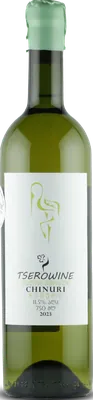 ChinuriTseroWine · Kartli
 KhikhviWiniveria · Kakheti
Vintages are producer declarations. A year we hold for one bottling says nothing about the rest of the range.
Reading the numbers
What a season does to a berry.
None of these numbers is a score. They describe the weather the fruit grew in, and the winemaker's answer to it is a separate story — which is why the guide never prints a single “great vintage”.
Winkler index
Season warmth (the Winkler index) is how many degrees each day's mean temperature rose above 10 °C, added up from April to October: a day averaging 18 °C adds 8 °C·days, a day below 10 °C adds nothing. More of it means riper fruit: higher sugar and eventual alcohol, lower acidity, softer tannin. A cool year keeps more acidity, and in late varieties such as Saperavi the tannin can stay green.
Days above 35 °C
Days above 35 °C are the other side of warmth. In that heat the vine closes its stomata and ripening stalls, berries get sunburn and aromatics are lost: a hot year is not the same as a warm one.
September rain
September rain falls in the month of rtveli in Kakheti. Water before picking dilutes the juice and thins concentration, while damp starts grey rot; the winery has to choose between ripeness and healthy fruit. For qvevri it matters twice over: the wine ferments on the skins, and damaged skins end up in the bottle.
Spring frost
Spring frosts (a minimum of −2 °C or lower after 10 April) hit young shoots. The crop comes out smaller and the second flush ripens unevenly — this is about how much wine there is and how uneven the lot is, not about its taste. The threshold is deliberately strict: a night at zero in early April happens every other year in Kakheti and does no harm to buds that have not yet opened.
What the numbers do not say
These are general facts of viticulture, not our conclusions about these wines: the same weather ends differently at a winery that sorted its fruit and at one that picked everything.
Sources
Where these series come from.
ERA5-Land and ERA5 reanalysis via the Open-Meteo archive
Temperatures from ERA5-Land, a grid of about 0.1°; precipitation from ERA5, a coarser grid. A gridded model, not weather stations in the vineyards.
One grid cell per region
Each region is computed at a single representative point, not as an average of its appellations. The card shows the cell's coordinates and elevation, which can differ from the vineyards'.
Season window
April 1 to October 31. A year is compared with the mean of the previous ten full seasons, provided there are at least eight of them.
About these numbers
A season that has not finished is marked as incomplete and is not compared: a full season is 214 days. A damaging frost is a minimum of −2 °C or lower between 10 April and 31 May — a night at zero in early April is common and does no harm to buds that have not opened.
Years are compared with the previous ten, not with the 1991–2020 climate normal: against that normal most recent years would read as warmer than usual — true about warming, but not about the year.